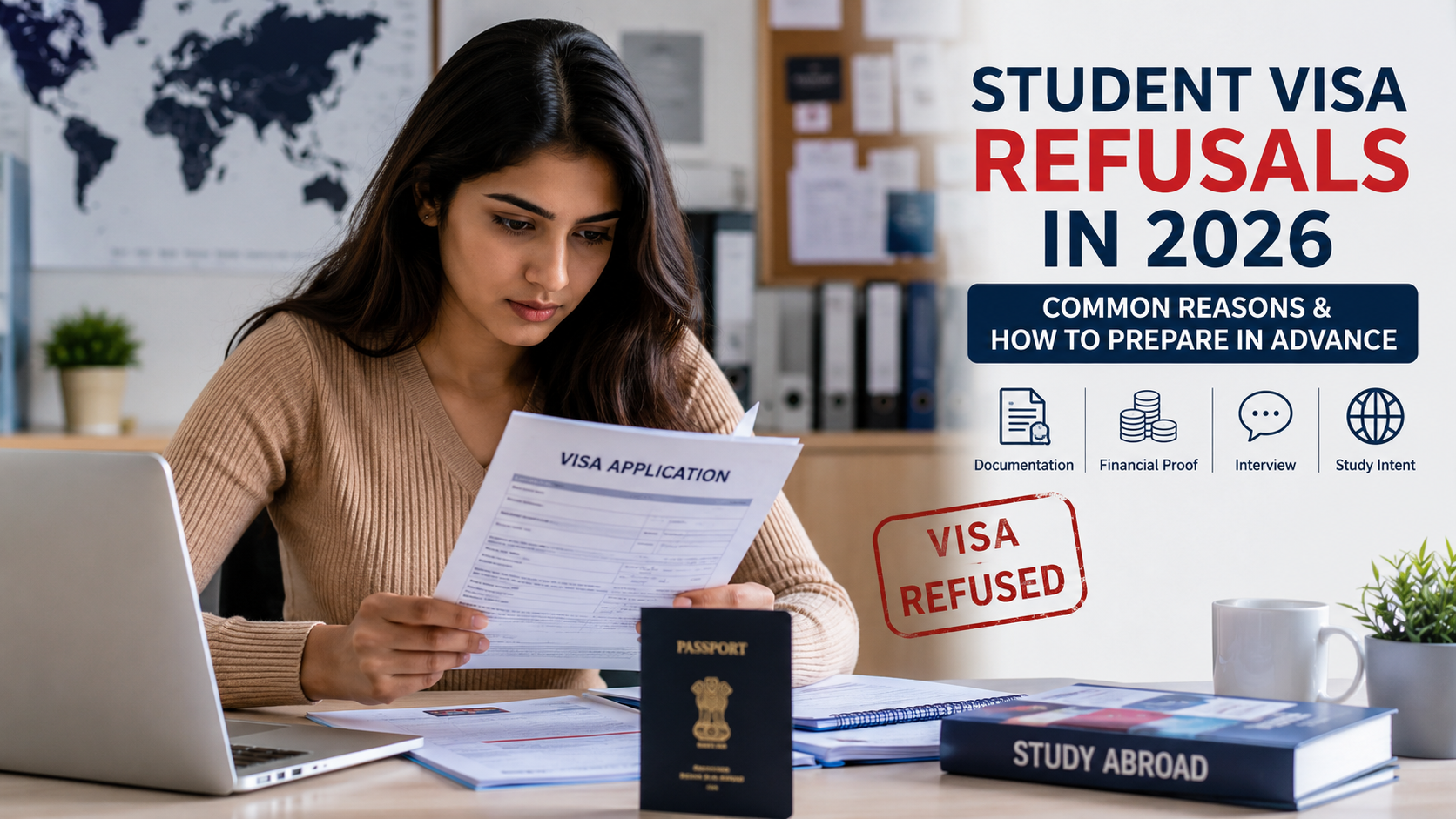
Learn the top reasons for student visa refusals in 2026 and proven strategies to improve approval chances through financial proof, documentation, and study intent clarity.
/student-visa-refusals-2026

Understanding Student Visas
Receiving an admission letter from an international university is an exciting milestone for any student. However, securing a student visa remains one of the most critical and sometimes challenging steps in the study abroad journey. In 2026, immigration authorities across major destinations such as Australia, Canada, the UK, and the USA continue to tighten verification processes to ensure applicants meet financial, academic, and genuine study requirements. Many refusals occur not because students are unqualified, but because of avoidable mistakes in documentation, financial proof, or unclear study intentions. This guide breaks down the most common reasons for student visa refusals and provides practical strategies to help you build a strong, successful application
Why Student Visa Refusals Are Increasing in 2026
Global student mobility has increased significantly, leading immigration authorities to adopt stricter screening processes. Governments want to ensure that international students are genuine, financially stable, and academically consistent. As a result, visa officers now conduct deeper assessments of financial records, academic history, and personal statements.

Common Reasons For Student Visa Refusals in 2026
1. Insufficient Financial Evidence
One of the most common reasons for visa refusal is failure to prove sufficient financial capacity. Applicants must demonstrate they can cover tuition fees, living expenses, travel costs, and emergency funds. Visa officers carefully analyze bank statements, sponsor documents, income sources, and transaction history. Red flags include unexplained large deposits, inconsistent balances, or incomplete financial documentation
2. Weak Genuine Student Intentions
Visa officers assess whether applicants are genuinely intending to study or using education as a pathway for migration. Applicants must clearly explain why they chose a specific course, institution, and country. Unclear academic progression or unrealistic career plans often lead to rejection.
3.Incomplete or Incorrect Documentation
Missing or incorrect documents are a major cause of refusal. Common issues include expired passports, missing transcripts, incorrect application forms, and unverified documents. Even small inconsistencies can raise concerns about credibility
4.Lack of Preparation
In some cases, applicants fail credibility due to the lack of preparation, Inconsistent answers, nervousness, or inability to explain study plans can negatively affect decisions.

How to Avoid Student Visa Refusal in 2026
1. Prepare Financial Documents Early
Start preparing financial evidence at least 3–6 months before applying. This includes bank statements, sponsorship letters, income proof, and scholarship documents. Ensure consistency and transparency in all financial records.
2. Build a Strong Study Plan
A strong study plan (Statement of Purpose) should clearly explain your academic journey, why you chose your course, and how it aligns with your future career goals. Clarity and realism are key factors in approval.
3. Ensure Document Accuracy and Consistency
Double-check all documents before submission. Ensure names, dates, academic records, and financial details match across all documents. Inconsistencies can lead to immediate rejection.
BNGENY CONSULTANCY SUPPORT
Need Help With Your Student Visa Application?
We support students through every stage of the study abroad journey including visa applications, SOP writing, interview coaching, and university admissions.
- Student Visa Guidance
- University Applications
- IELTS Preparation
- SOP & Personal Statement Writing
- Visa Interview Coaching
Frequently Asked Questions (FAQ)
Can a visa refusal affect future applications?
Yes, but it depends on the reason for refusal. Proper correction improves future success chances.
Can I reapply after a refusal?
Yes. You can reapply after addressing the issues stated in your refusal letter.
What is the most common reason for refusal?
Insufficient financial evidence and weak study intentions are the most common reasons.
How can I improve approval chances?
Prepare strong financial proof, a clear study plan, and ensure accurate documentation
Visa refusals can be disappointing, but many are preventable with proper planning and preparation.
In 2026, immigration authorities continue placing greater emphasis on financial capability, genuine student intentions, documentation accuracy, and applicant credibility.
Students who prepare early, understand visa requirements, and present a well-organized application significantly improve their chances of success.
Contact BNGENY Consultancy today
Take the next step toward achieving your international education goals with confidence.
